
How I Organize My Work and My Life: A Practical System
INSIGHTS
Mykyta Petukhov
10/15/20254 min read
From Motivation to Systems
Managing multiple projects, deadlines, goals, and responsibilities at the same time is not a matter of motivation — it’s a matter of systems.
Over the years, while working in digital marketing, SEO, paid media, and content across different companies and personal projects, I realized one thing very clearly:
if something is not written, structured, and measured, it will eventually be forgotten, delayed, or poorly executed.
This article is not about “productivity hacks”. It’s a practical overview of the system I use daily to organize my professional and personal life, prioritize tasks correctly, meet deadlines, and align my actions with short-, medium-, and long-term goals.
The Philosophy Behind My System
Before talking about tools, it’s important to explain the principles behind them.
My system is based on a few simple rules:
Nothing lives only in my head — everything is written down
Every task has a priority, a deadline, and a purpose
Execution, planning, and reflection are separate phases
Time is tracked to understand reality, not to create pressure
Tools must be flexible, scalable, and ideally free
The goal is not to “do more”, but to do the right things, at the right time, with full awareness of their impact.
Asana: The Core of My Task & Project Management
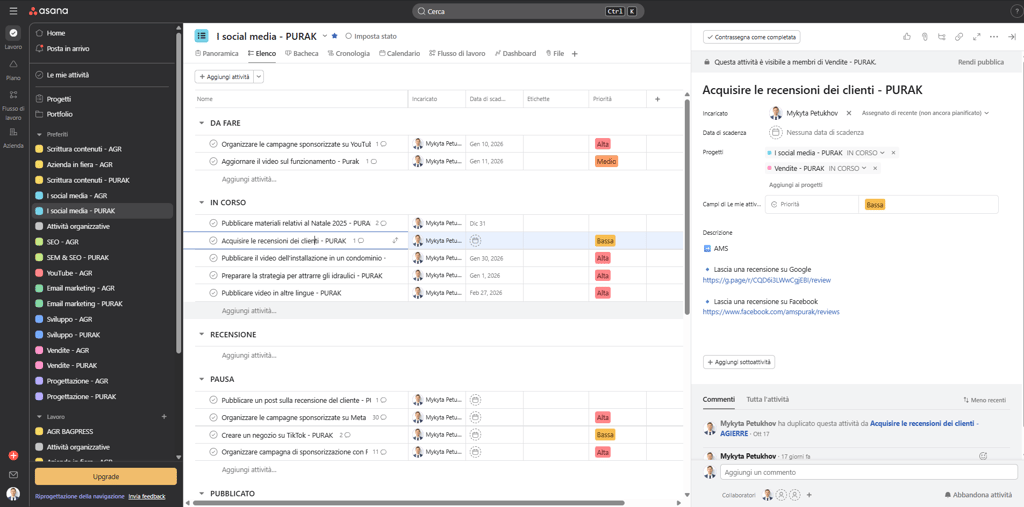
At the center of my workflow is Asana, which I use as my main task and project management system.
I chose Asana primarily because:
it offers powerful functionality even in the free version
it doesn’t artificially limit project structure
it scales well as responsibilities grow
How I Structure My Work in Asana
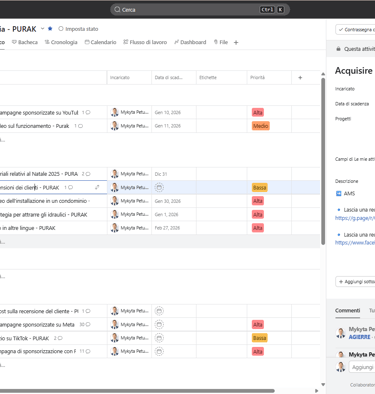
All my work is organized into projects, which are then divided into stages, followed by clearly defined tasks.
Each task includes:
a specific objective
a priority level
a deadline
a clear scope
This structure allows me to manage:
professional projects (SEO, paid media, content, websites)
personal projects
study and self-development activities
Asana acts as my operational brain — it tells me what needs to be done and in which order.
Clockify: Detailed Time Tracking for Professional Work
Once tasks are structured, the next step is understanding how much time they actually take.
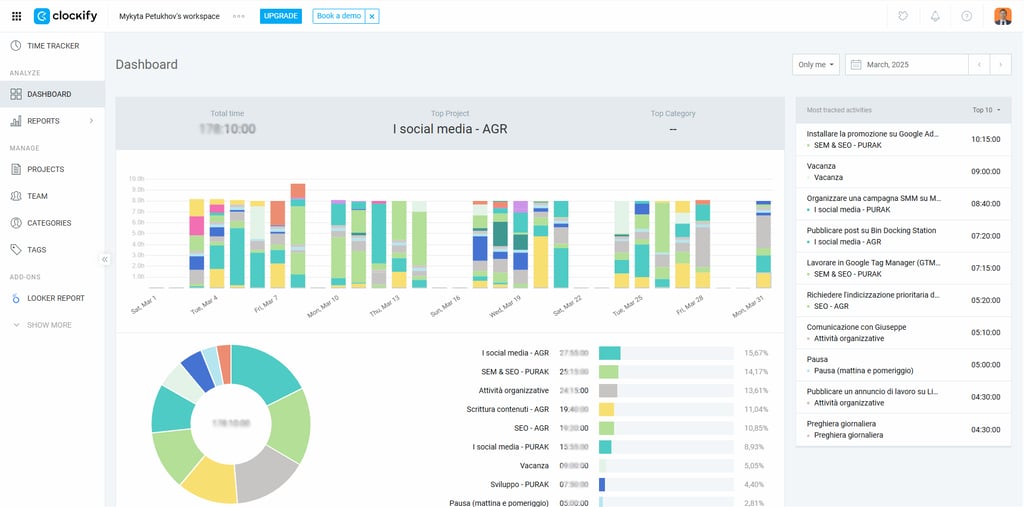
For this purpose, I use Clockify, integrated directly with Asana.
An important distinction in my system:
Clockify is used only for my professional life
time tracking here is very detailed
I track time at task level to:
compare estimated vs real effort
improve future planning
understand where my professional time truly goes
Clockify helps me make my work measurable and improvable, without adding unnecessary complexity or cost.
Google Calendar: Strategic Time Planning
While Asana and Clockify focus on execution and measurement, Google Calendar is where I plan and protect my time.
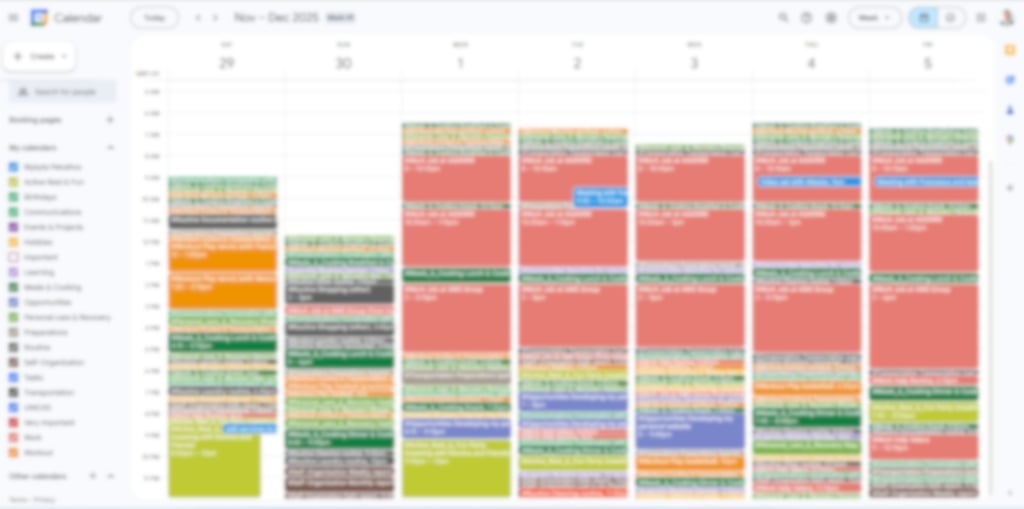
I use it as a strategic overview, organizing my days and weeks using:
specific categories (work, study, sport, routines, personal time)
color coding for instant visual clarity
This allows me to:
balance professional and personal commitments
avoid overload
reserve time for deep work and recovery
Calendar is not about tracking — it’s about intentional allocation of time.
GTimeReport: Tracking Life at a Macro Level
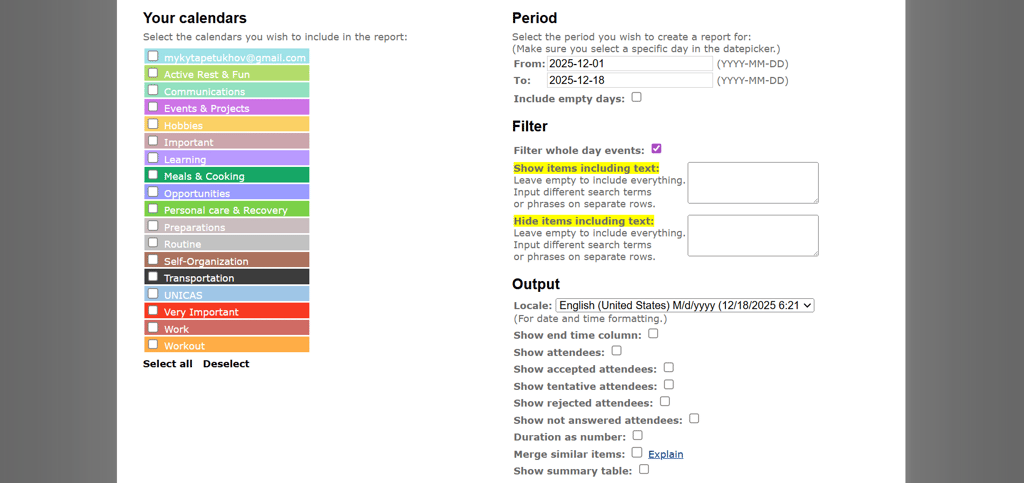
To understand my life as a whole, I use GTimeReport.
Unlike Clockify, GTimeReport:
tracks everything, not just work
uses a higher-level view, without excessive detail
Here I include:
work (at a macro level)
studying
routines
sports
hobbies
personal time
The goal is not optimization at all costs, but sustainability.
This tool helps me see patterns, imbalances, and trends over time.
Excel: Goals, Finances, and Self-Reflection
All data collected by tools becomes valuable only when it is analyzed.
For this reason, Excel plays a fundamental role in my system.
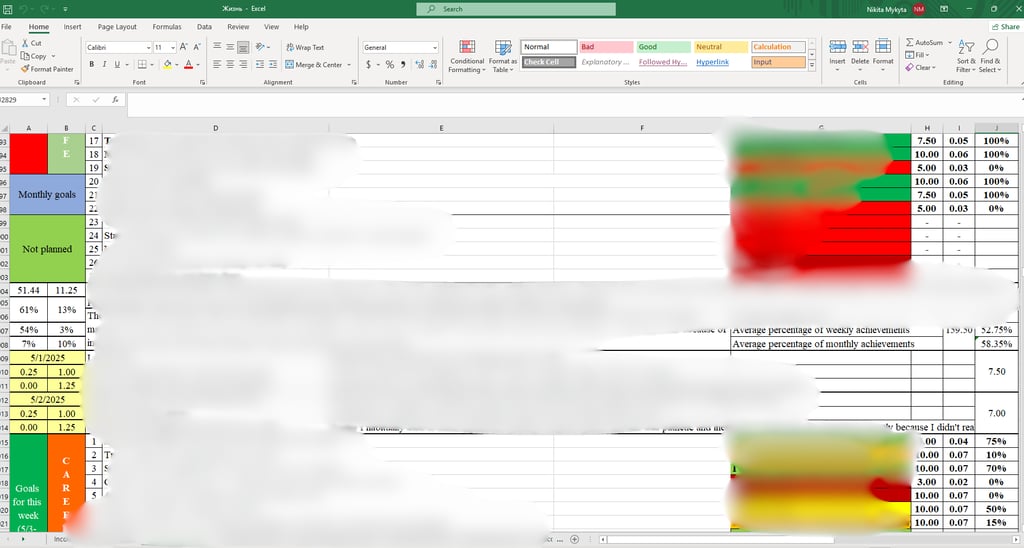
I use it to:
track income and expenses
set weekly, monthly, and yearly goals
perform daily reporting
reflect on what worked, what didn’t, and why
This is where execution turns into learning and decision-making.
Excel is not about productivity — it’s about awareness.
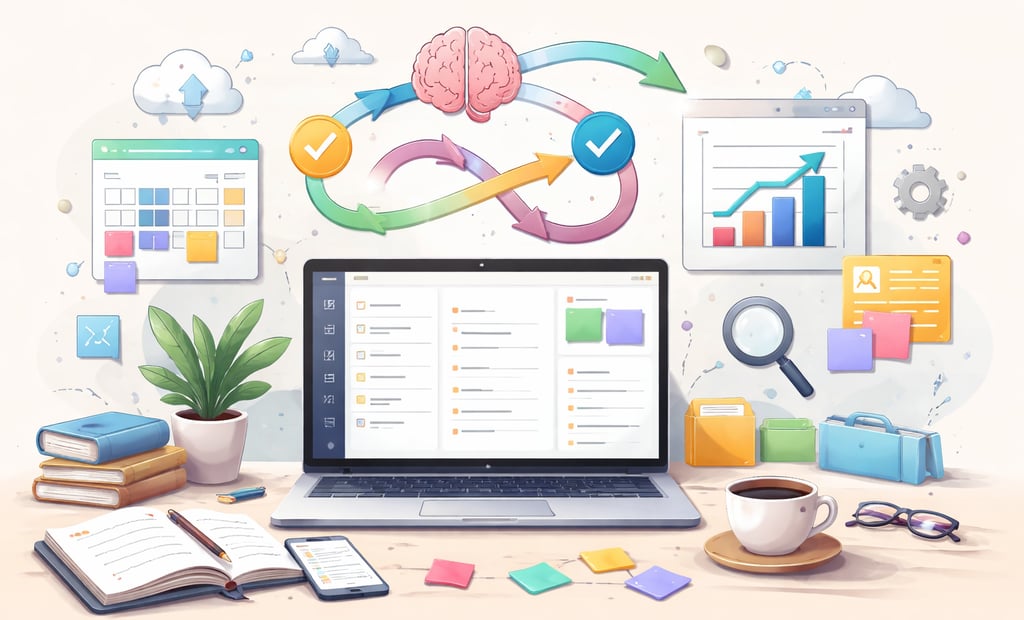
A System That Evolves With Me
This system is not perfect, and it’s not static.
It evolves as my responsibilities change, but it remains:
flexible
scalable
intentionally simple
largely based on free tools
The real value doesn’t come from the tools themselves, but from the clarity and discipline with which they are used.
Let’s Work Together
If you’re looking for someone who:
works with structure and intention
understands both execution and strategy
measures results and reflects on them
treats time, data, and priorities seriously
I’d be happy to collaborate.
👉 Feel free to reach out through my website and let’s work together.
Address
03043 Cassino (FR)
Italy
Connect
© 2025. All rights reserved.