
Using TikTok Ads for B2C Lead Generation
AMS GROUP S.R.L.S.
Mykyta Petukhov
12/6/20253 min read
Background & Context
As part of my role as Digital Marketing Specialist at AMS Group, distributor and seller of Purak, an anti-limescale solution for homes, businesses, and industrial plants, I had the opportunity to run TikTok Ads campaigns focused on lead generation.
PURAK is a product designed to work everywhere water flows, making it suitable for a wide range of use cases. However, in this specific activity, the campaigns were mainly oriented toward B2C, with the goal of capturing contacts interested in learning more about the solution and supporting the sales team in the conversion process.
The objective was not aggressive scaling or high-budget experimentation, but rather to test TikTok as a lead acquisition channel, validate the platform’s mechanics, and understand how it performs compared to other paid media channels already in use.
Campaign Objective
The primary goal of the campaigns was lead generation.
Instead of pushing for immediate online purchases, TikTok was used as a channel to:
Capture contact details from interested users
Pass leads to the sales team for qualification and follow-up
Evaluate lead quality and cost consistency over time
This approach allowed us to test TikTok in a controlled way while keeping the funnel aligned with an existing sales-assisted conversion process.
Strategy & Campaign Setup
To reduce creative risk and speed up execution, I chose to leverage existing organic content that had already been published on the brand’s TikTok profile.
The logic behind this choice was simple:
Organic posts already showed engagement signals
Native-looking content performs better on TikTok
Promoting proven creatives is more efficient when budgets are limited
The campaigns were set up with:
Lead Generation objective
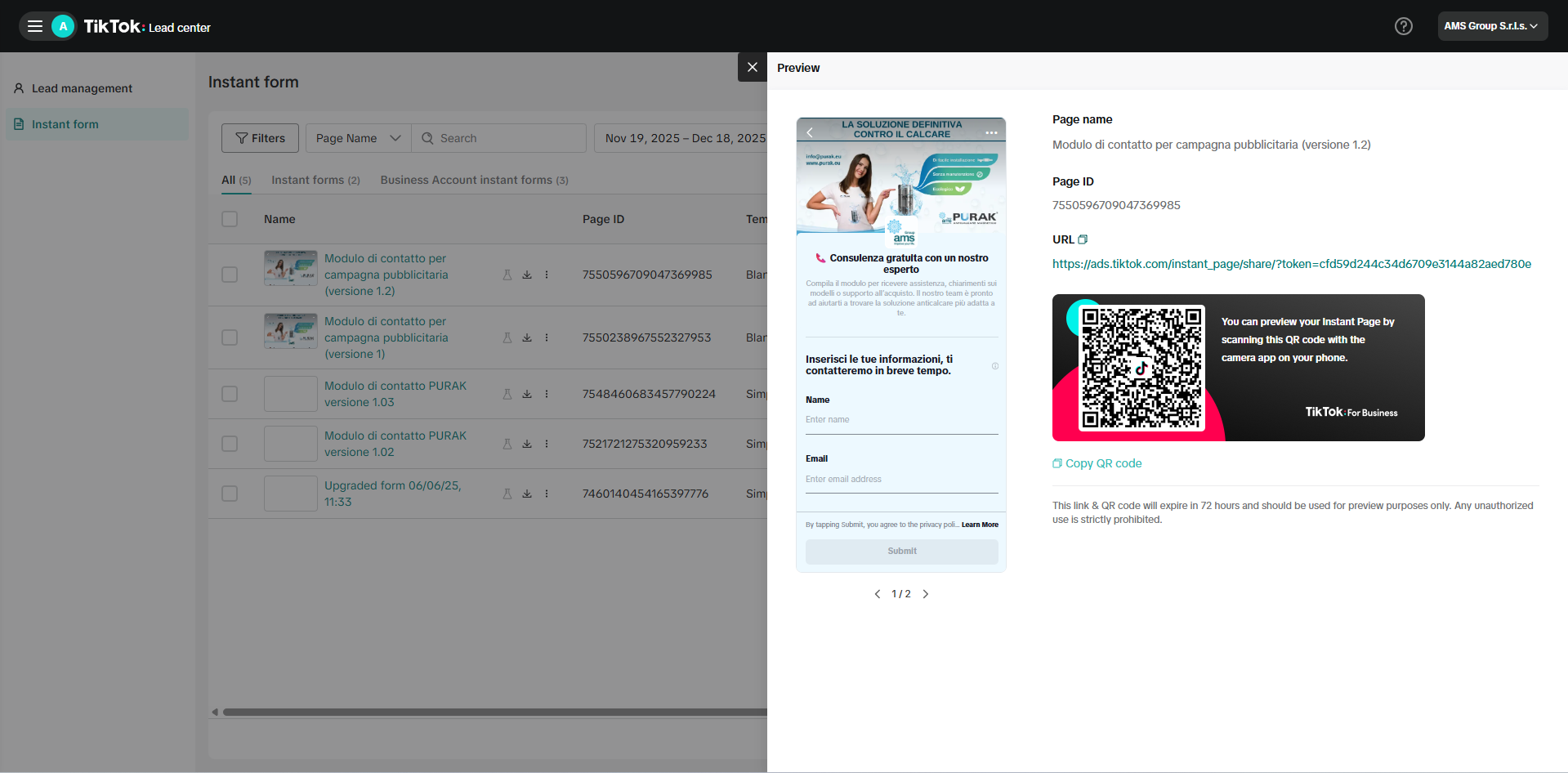
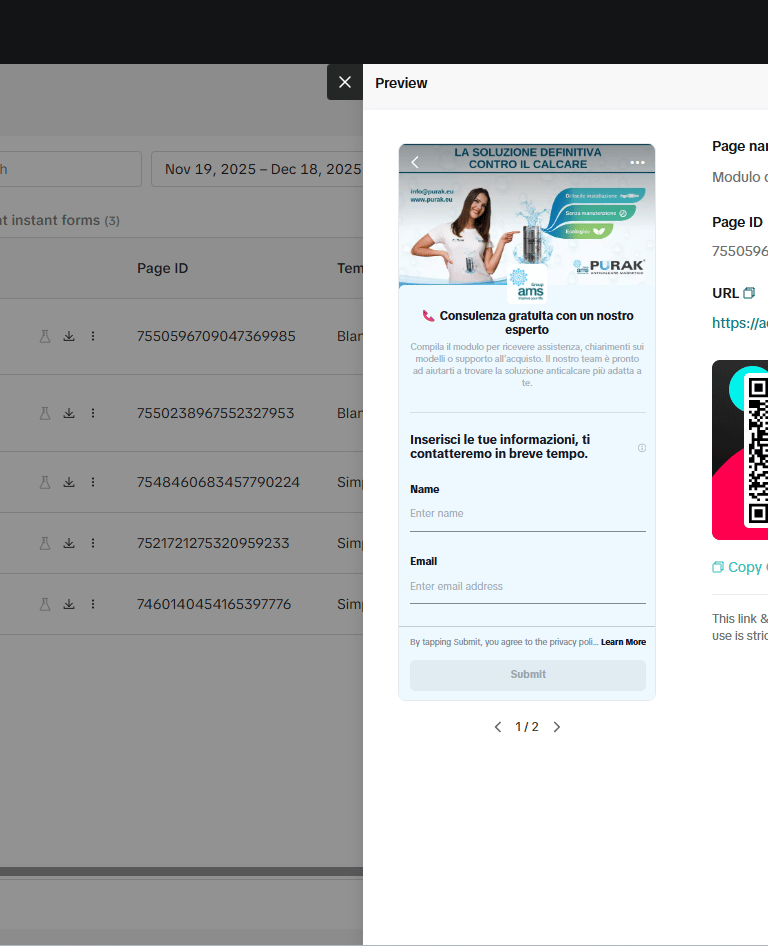
TikTok Instant Forms
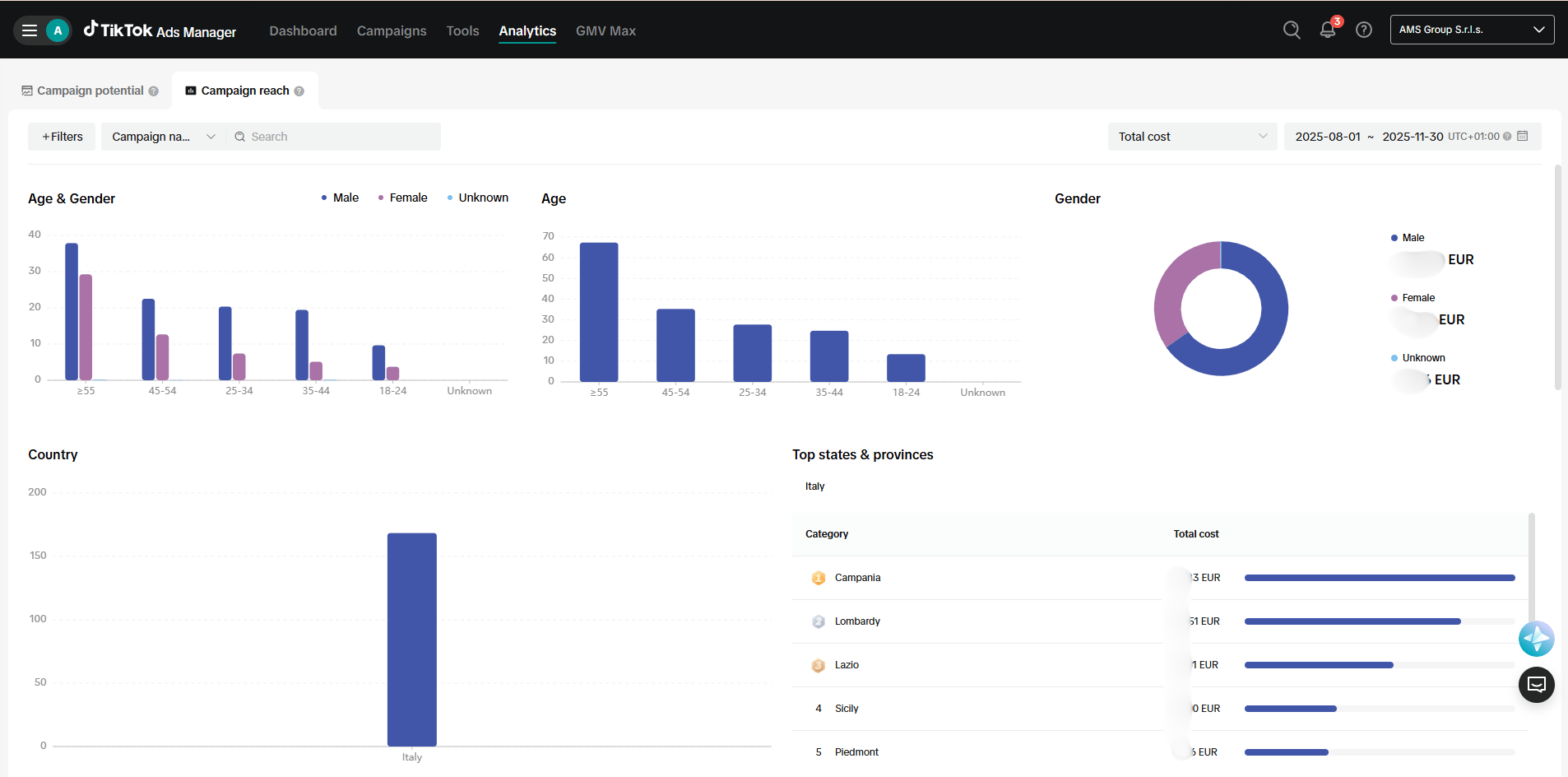
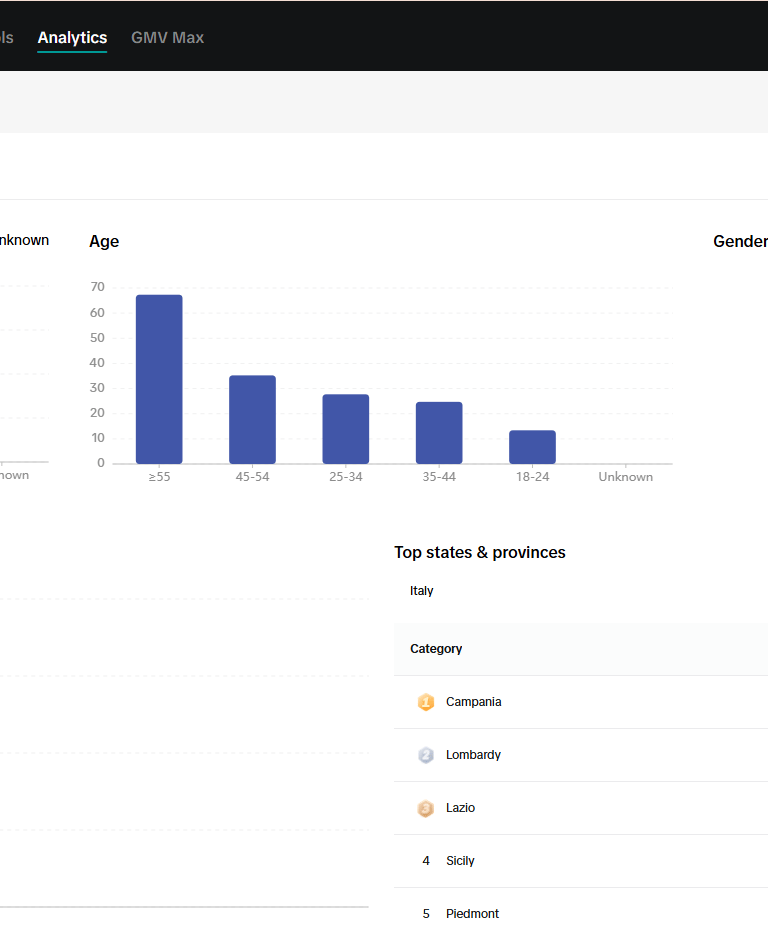
Target audience: Italy, 25+
Focus on simplicity and low friction in the user journey
Lead Form & User Experience
The lead form was intentionally short and frictionless, including only:
Name
Surname
Phone number
Email address
No custom or qualifying questions were added at this stage.
The goal was to maximize form completion and allow qualification to happen later, directly through the sales team.
This setup helped ensure a smooth transition from ad to contact, keeping the user experience fast and intuitive.
CRM Integration & Sales Handoff
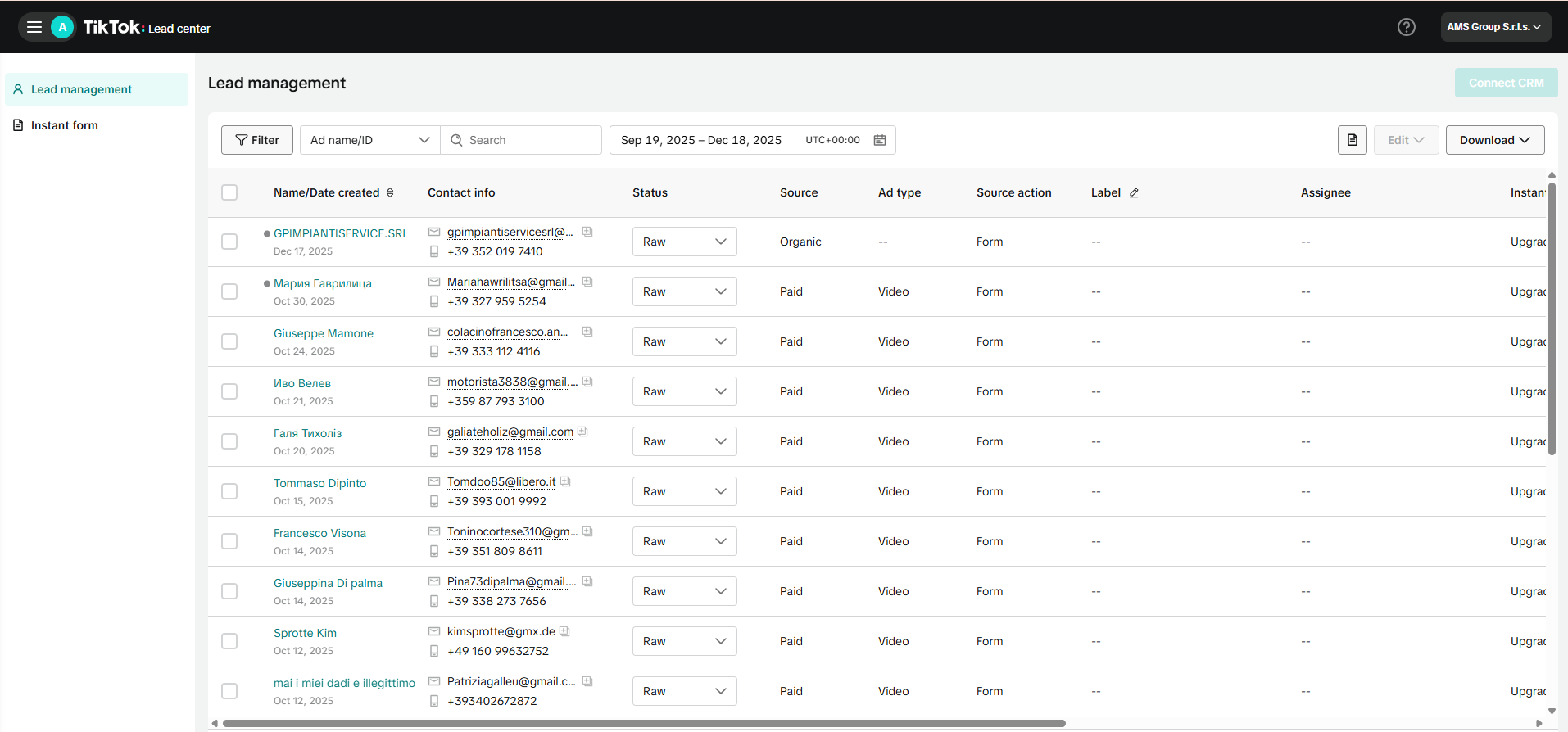
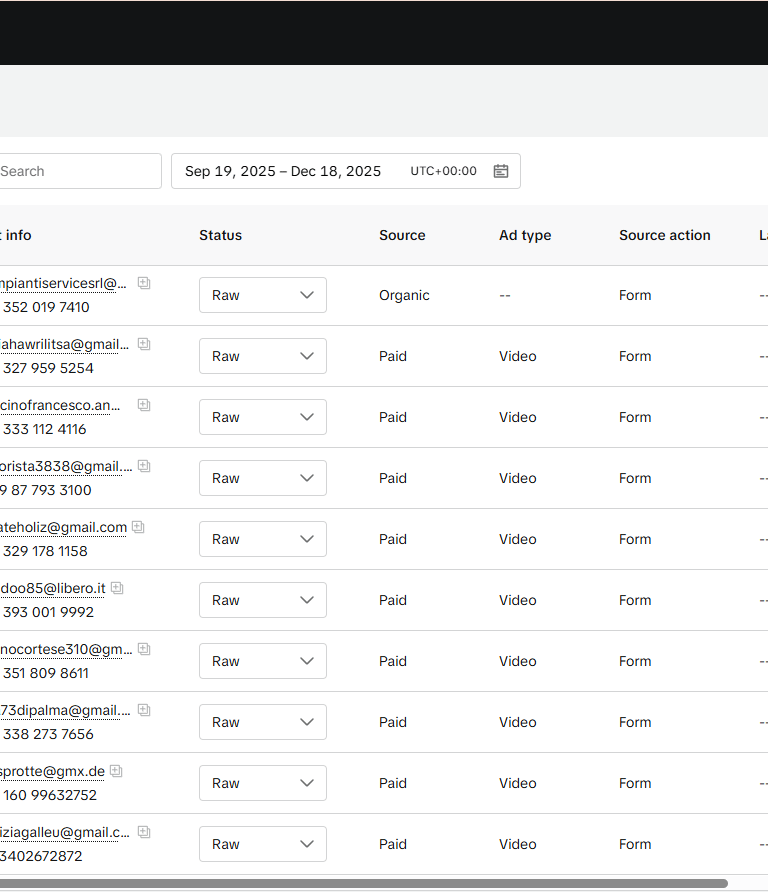
Once collected, leads were manually synced into the company CRM, initially HubSpot and later Zoho.
A basic but effective lead pipeline was used, including statuses such as:
New
Open
Connected
In progress
Customer
Unqualified
After registration in the CRM, leads were contacted by the sales manager, who:
Assessed the client’s needs
Helped identify the most suitable PURAK solution
Managed the sales process toward conversion
This setup ensured continuity between marketing and sales and allowed feedback to flow back into campaign evaluation.
Results & Performance Evaluation
Given the limited budgets, the goal was not to achieve outstanding volume, but to assess consistency and lead usability.
Key observations included:
A stable cost per lead in the initial phase
Leads that showed genuine interest in the product
A recurring challenge related to price sensitivity, which affected conversion potential
After reaching a sufficient number of leads, I conducted a performance analysis and compared results with other paid channels. The conclusion was that, for this specific product and audience, Meta Ads delivered higher efficiency.
As a result, the budget was strategically reallocated, prioritizing the channel with better performance while keeping TikTok as a validated but secondary option.
Key Learnings
This experience confirmed several important points:
TikTok can work as a lead generation channel, even for non-impulse products
Native content and simplicity are essential for performance
CRM integration and sales feedback are critical for proper evaluation
Platform selection should always be data-driven, not trend-driven
Rather than forcing scale, the correct decision was to optimize overall performance by reallocating resources where they had the greatest impact.
Final Considerations
This case study represents a practical, hands-on use of TikTok Ads within a real business context.
While budgets were limited, the experience allowed me to:
Manage TikTok campaigns end-to-end
Align paid media with CRM and sales processes
Analyze performance objectively
Make informed strategic decisions based on results
Most importantly, it demonstrates a solid understanding of TikTok Ads fundamentals and a mindset focused on scalability, testing, and continuous optimization.
Address
03043 Cassino (FR)
Italy
Connect
© 2026. All rights reserved.